For nearly 20 years Blogher has provided Internet space and tools for women to write blogs. Many of these blogs are from mothers who express themselves and their thoughts and concerns about being a mother in today’s society. Some offer parenting tips, or blend parenting with other personal activity interests (e.g., cooking, party planning, travel). 10s of thousands of women blog through blogher; many with devoted followers. Consider the potential benefits and costs to this blogging. What does writing a parenting blog mean in terms of time cost and personal energy? What does it mean to the commodification of a mother’s image? Might she feel the need to ‘be’ a certain kind of mother, or to share certain stories or images to have a place in the eyeball marketplace of readers? And what might her sharing stories and images of her children and family mean to their sense of personal privacy? In other words, while we might argue that personal blogging can be an extension and expression of the identity of motherhood that is positive for the woman’s confidence, what costs might it run to her self and to her family?

https://mamaandbabylove.com/health-motherhood-blogs/
As society has become increasingly dependent on technology, blogging, too, has become more widespread, especially among mothers. Blogs have become outlets for discussing and reflecting on various parenting techniques and experiences, as well as spaces to offer advice and support for other mothers. Overall, blogging offers multiple beneficial uses for the blogger as well as the reader, while at the same time, can have a negative impact on the family’s and individual’s wellbeing.
Blogging includes both a time cost and the use of personal energy. For a parent, it can be difficult to take time out of their busy schedule to sit down and write, especially when a nice nap is also an option. Simultaneously, though, blogging can be therapeutic and relaxing to a certain extent. Similar to journaling, blogging gives one an outlet for reflection, which is very beneficial when it comes to mental health and the overall health of the family. When caregivers are able to take time and energy to reflect on their experiences as a parent, moving forward, it may become easier to go through similar experiences after previously experiencing and reflecting on them.
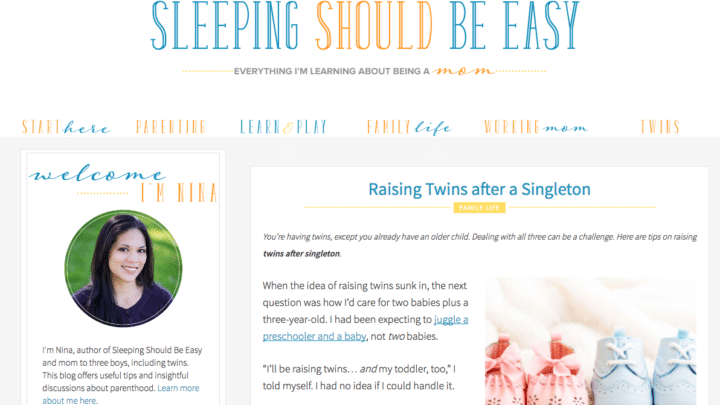
https://twinsmommy.com/blogging-ideas/
While often beneficial, sharing personal experiences has the potential of becoming harmful to the family dynamic. Blogging can expose private matters that some family members are not comfortable having online. Even though a parent blogging may be comfortable with it, boundaries may be broken by posting personal anecdotes about other family members. Also, while one may feel comfortable initially sharing family experiences, once they are posted, family members may realize that sharing personal stories is something they are not comfortable with. This can be detrimental to a family’s sense of personal privacy as it can be difficult to remove what is shared online from the public eye. It is important for parents who choose to blog ensure that they, as well as their family members, are comfortable with what is being posted online.
Many mothers choose to blog in order to emphasize their identity of a mother and to share their personal perspective on certain situations. This process can be empowering for mothers by being able to support others throughout their journey of being a parent. In the journal article, Parenting Gone Wired: Empowerment of New Mothers on the Internet, researchers, Clare Madge and Henrietta O’Connor, investigate a popular blog, Babyworld, and its users. From their study, they report, “Online support was translated into feelings of empowerment by many of the women using Babyworld. Several women noted this sense of empowerment through increased confidence and a greater sense of control” (p. 207). By having an outlet to share their highs and lows and find other mothers going through similar experiences, parental confidence can increase by knowing that they are not alone. This leads to empowerment by connecting a group of people doing something important. Because of this, though, mothers may feel pressure to glorify their experiences, in order to portray her parenting to others in a positive light.
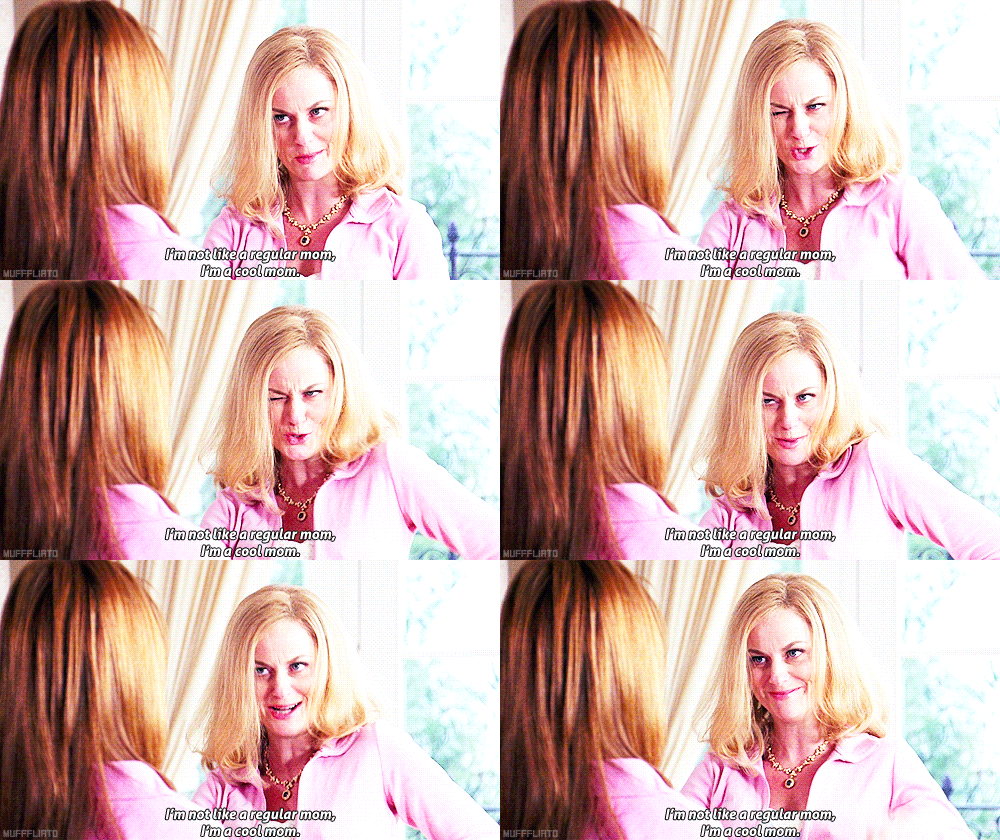
While some blogging parents are good at being transparent, blogging can also trigger the need to be a certain kind of mother. This is partly because readers often expect the sharing of positive and helpful experiences, which is often motivated by the blogger’s fear of negative feedback from readers. According to TIME article, Help! My Parents are Millennials by Katy Steinmentz, “Nearly 80% of millennial moms say it’s important to be ‘the perfect mom,’” (p. 42). This phenomenon is encouraged by the constant posting of images and stories often done in blog posts in order to portray one’s family as perfect. At the same time, the competitive nature of parents and their various parenting styles can lead to the need to be perfect in order to avoid criticism, especially online. Today, people are not afraid to give criticism when hidden by a screen and a username. The criticism that some face on their parenthood blogs influence one’s image of self as a parent. Negative feedback toward one’s parenting experiences may be detrimental to their confidence, while at the same time positive feedback can reinforce certain parenting behaviors. Overall, blogging has the potential to encourage negative behaviors, such as attempting to be perfect and crossing privacy boundaries, while simultaneously, offers a therapeutic route for reflection and encouragement.
Works Cited
Madge, C. and O’Connor, H. (2006). Parenting gone wired: empowerment of new mothers on the internet? Social and Cultural Geography,7(2), 199-220. doi: 10.1080/14649360600600528
Steinmentz, K. (2015). Help! My parents are millennials: How this generation is changing the way we raise kids.TIME, 35-43.

 Technology in Family Blog - Naomi Kaplan